
Can You Prevent Wrinkles from Developing?

Wrinkles are a natural part of the aging process. Although they are inevitable, there are things you can do to help prevent them from developing. 

Protect Your Skin from the Sun

Wrinkles typically appear in areas that are most exposed to the sun, such as your face, neck or the back of your hands. The sun’s harmful UV rays damage the DNA in your skin cells, which causes your skin to age and become less elastic. 

Some sunlight is important because your skin uses it to produce vitamin D, which helps to build and maintain strong bones. However, too much sun is harmful. If you’re going to be out in the sun for extended periods of time, cover up your skin, use sunscreen and seek shady areas. Wear a wide-brimmed hat and sunglasses.

Stop Smoking

There are many reasons not to smoke, and wrinkled skin is as good of a reason to quit as any. Smoking dries your skin out and narrows your blood vessels. This reduces the supply of oxygen and vital nutrients to your skin and can cause changes to how firm your skin is. So, people who smoke are more likely to have facial wrinkles at a younger age. Puckering up your lips when you smoke also causes lines to form around your mouth. 

If you smoke, try to give it up. This will be good for your general health, as well as good for your skin.

Stay Hydrated 

Healthy skin starts from within. Stay hydrated with water, coconut water, and green tea (which is full of antioxidants). Not only is moisturizing from within important, but water rids your body of toxins.

Make Healthy Lifestyle Choices

There are several lifestyle changes you can make to help your skin stay youthful and prevent wrinkles:

  • Eat a healthy, well-balanced diet. Your skin needs a good supply of vitamins and minerals to stay healthy.  
  • If you drink alcohol, do so in moderation. Alcohol can dehydrate your skin, leading to wrinkles. 
  • Keep active. Simple activities, such as walking, improve circulation and help deliver more oxygen to your skin.

Whether you have just started to notice the first signs of aging on your skin or your wrinkles have already settled in, contact THE CENTER for Advanced Dermatology at phone or website to learn more about wrinkle prevention tips and treatments that can help you look younger.

Posted: November 4, 2020 By:

What are the Side Effects of Microdermabrasion?

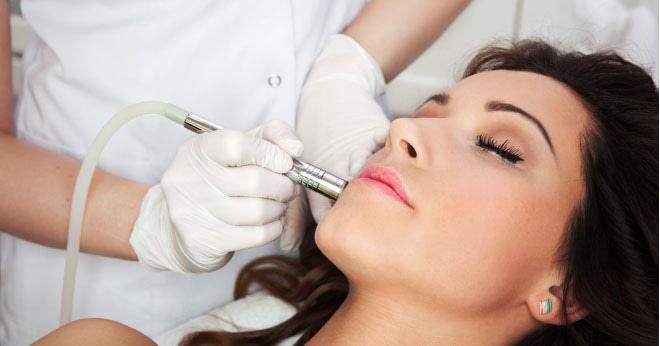
Microdermabrasion is one of the easiest, safest and most effective anti-aging treatments you can get. The treatment exfoliates dead skin cells and leaves fresh new skin in its place. As microdermabrasion is gaining in popularity and accessibility, it is important to understand the side effects that can happen with this type of skin rejuvenation treatment. Microdermabrasion is considered very safe with only the rarest cases causing anything besides brief, mild side effects. Of course, it’s always best to be prepared for the potential consequences of a treatment, no matter how small. So, here’s a closer look at the most common side effects of microdermabrasion:

Pigmentation Issues: One possible side effect of microdermabrasion is discoloration of the skin, particularly in people who have a darker complexion. Following the treatment, it is possible to see slight unevenness in the pigmentation.

Redness: Some people who have had microdermabrasion notice redness of the skin following treatment. This condition isn’t permanent and usually resolves itself in just a few days.

Dryness: Microdermabrasion may cause dry or flaking skin. In most cases, this dry skin condition goes away after just a few days.

Itching: Itchy skin is another temporary side effect of microdermabrasion. 

Purging: Purging is a side effect of acne microdermabrasion. The exfoliation of the treatment opens the pores, exposing bacteria. This exposure brings on an acne surge, but it is a temporary reaction to the treatment and will go away in a few days.

Although microdermabrasion is a very safe procedure, you do need to be aware of potential side effects. It’s important to choose a doctor who is experienced with the treatment, ensuring that the right safety steps will be taken. Microdermabrasion in Phoenix with Dr. Holy will leave you with great looking skin with minimal, if any, side effects. 

To learn more about microdermabrasion or to schedule an appointment, contact THE CENTER for Advanced Dermatology at 602-867-7546 or website.

Posted: October 25, 2020 By:

Are All Warts Caused by HPV?

Warts are common, harmless skin growths that can be treated by a dermatologist. Warts appear when a virus called human papillomavirus (HPV) infects the top layer of the skin. 

There are several different kinds of warts including common warts, plantar (foot/mosaic) warts, and flat warts. All types of warts are caused by HPV. Wart are contagious. They can be transmitted by direct contact or indirectly through contaminated surfaces and objects.

Warts can grow on any part of your body, but are most commonly found on the hands and feet. Their appearance depends on their location. On the tops of the hands and face they protrude, while on pressure areas such as the palms and soles they are often thick and flat.

Warts are often skin-colored and feel rough, but they can be dark (brown or grey-black), flat and smooth. Warts can be diagnosed simply by looking at them but in rare cases a biopsy might be performed to be certain.

Some people are more likely to develop a wart than others. For children, warts sometimes disappear without treatment over a period of several months to years. Warts in adults do not disappear as easily or as quickly as they do in children.

Warts often go away with over-the-counter treatment. However, warts that are bothersome, painful, multiplying rapidly or if you are unable to get rid of the wart at home you should schedule an appointment with Dr. Holy to seek treatment. There are many treatments for warts, and treatment options depend on the age of the patient as well as the location and type of wart.

Contact THE CENTER for Advanced Dermatology at 602-867-7546 or website if you have questions or concerns about warts, other skin conditions or would like to schedule a skin evaluation. 

Posted: October 18, 2020 By:

How Long Do Dermalinfusion Results Last?

Dermalinfusion is one of the most advanced and dynamic skin treatments available today. Dermalinfusion is an advanced type of microdermabrasion, with the drying effect of the traditional aluminum-based crystals and the hydrating effect of liquid solution delivery. 

Standard microdermabrasion uses crystals to “sand blast” the skin. Dermalinfusion gently removes rough surface cells with a diamond tip wand. At the same time, debris is suctioned from the skin and pores while a soothing infusion of special-action serum is pressure-assisted into the skin. 

Dermalinfusion moisturizes dry and flaky skin and clarifies oily or acne-prone skin, providing a brightening boost and balance to discolored and imbalanced skin. Because dermalinfusion is non-invasive, patients can immediately return to work and other daily activities immediately following their procedure.

Immediately after dermalinfusion treatment in Phoenix, most patients notice a 70% improvement in skin volume and luminosity. Dermalinfusion also has the added benefit of stimulating collagen production within the skin. This means that the results can continue to improve even after the initial results.

For best results, more than one treatment may be recommended to achieve maximum improvement in your skin condition. The number of sessions will be based on the type of skin issues you are experiencing and how your skin responds to treatment.

How long your dermalinfusion results last depend on how well you maintain your skin through a comprehensive skincare regimen. The use of moisturizers, creams, cleaners and sunscreen will increase the longevity of the results.

Dermalinfusion is non-invasive and a great treatment option for various skin concerns such as aging, hyperpigmentation, acne, dry skin and more. The dermalinfusion technology offers a personalized approach, resulting in fresh feeling and incredible looking skin. This procedure is painless and safe, and desired results are achieved quickly without discomfort or the potential complications of more invasive treatments. To schedule your dermalinfusion skin treatment in Phoenix, contact THE CENTER for Advanced Dermatology at 602-867-7546 or website. Dr. Holy will tailor a procedure to meet the specific needs of your individual skin.

Posted: October 11, 2020 By:

What is Psoriasis?

Psoriasis is a chronic auto-immune disease that causes a dry, reddish and scaly rash. Originating from the Greek word psora, meaning being itchy, psoriasis is a common skin condition that affects millions of people in the United States. Normally, skin cells reproduce every 21-28 days. With psoriasis, skin cells reproduce at a much faster rate of 2 to 6 days. The accelerated cell production causes constant shedding of the skin as the older skin cells are replaced with new skin cells. There are various types of psoriasis that can develop from various triggering agents in all parts of the body and require specific treatment based on the severity of the psoriasis.

Plaque psoriasis (psoriasis vulgaris) is the most common form of psoriasis, affecting 80-90% of patients who develop the condition. Characterized by dry, itchy, raised and inflamed red lesions covered in silvery white scales, plaque psoriasis appears on the surface of the skin most commonly on the knees, lower back, scalp, nails and elbows, but can appear anywhere on the body. The flaky white skin cells build up on the inflamed area and over time are dislodged and shed. 


Inverse psoriasis is found in skin fold areas that are subject to irritation due to sweating and rubbing of the skin such as the armpits, groin, under the breasts or other folds around the genital and buttock area. Bright red lesions, without the white flaky scales, that may appear shiny and smooth in texture are generally the first symptoms of inverse psoriasis.

Guttate psoriasis first appears in childhood/young adulthood and forms many small red spots on the skin, generally on limbs and the scalp.

Pustular psoriasis is a less common form of psoriasis characterized by white blisters of non-infectious pus that surround patches of red skin. 

Erythrodermic psoriasis is the rarest form of psoriasis. Common among individuals who have unstable cases of plaque psoriasis and undefined lesions, erythrodermic psoriasis is an inflammatory form of psoriasis that develops on most of the body’s surface and causes extensive skin shedding, severe itching and pain.      

While there is currently no cure for psoriasis, proper treatment is dependent on the severity, type and location on the skin affected by the psoriasis. Topical treatments, phototherapy and/or systemic medications are common treatments recommended for psoriasis patients. To learn more about psoriasis or to find out how Dr. Holy can help you, contact THE CENTER for Advanced Dermatology at 602-867-7546 or website.

Posted: October 4, 2020 By:

Types of Botox Treatments

When most people think of Botox the first thing that usually comes to mind is wrinkle reduction. In addition to being the gold standard for wrinkle reduction, Botox can also be used to treat a variety of issues, both cosmetic and non-cosmetic. Types of Botox treatments include:

Eyelid Spasms: The first use of Botox that was approved by the FDA back in 1989 was for the treatment of certain types of eye muscle problems or abnormal spasm of the eyelids (blepharospasm).

Excessive Sweating: Botox is a temporary treatment option for sufferers of hyperhidrosis or excessive sweating. Botox is injected into the sweat glands just under the skin to temporarily block the chemical signals from the nerves that stimulate the sweat glands. Botox prevents unnecessary sweating for an average period of 6 to 7 months.

Migraines: In 2013, Botox received FDA approval for the treatment of migraine headaches. The treatment involves the injection of Botox into 7 different locations including the temples, neck, shoulders and forehead. 

Chronic Neck and Cervical Muscle Pain: Botox injections can significantly improve pain levels and overall quality of life for sufferers of chronic pain. When Botox is injected into target muscles, it blocks signals that cause unnecessary muscle tightening; the cause of chronic pain.

Overactive Bladder: Botox is often used to treat several incontinence and overactive bladder symptoms when other types of medications do not work or cannot be taken. Specific symptoms may include a strong need to urinate with leaking or wetting accidents, a strong need to urinate right away, and frequent need to urinate.

Muscle Stiffness: Botox is used to treat increased muscle stiffness in the elbow, wrist and finger muscles in people with upper limb spasticity.

Wrinkle Smoothing: As your facial muscles contract, the overlying skin is pushed and pulled in different directions. These repetitive actions lead to the formation of wrinkles. To smooth these lines, the muscles responsible for them need to relax. Botox breaks the communication chain between muscles and nerves, leading to forced muscle relaxation.

To learn more about the many uses of Botox, contact THE CENTER for Advanced Dermatology at 602-867-7546 or website

When Should I See a Dermatologist for Acne?

Acne is a highly common skin condition – about 85% of us will have it at some point in our lives.  And, with the abundance of over-the-counter acne treatment products available today, it’s easy to forget that acne is not just a cosmetic issue. It’s an actual medical condition that very often should be treated by a dermatologist. 

Acne vulgaris is a long-term skin disease that occurs when hair follicles become clogged with dead skin cells and oil from the skin. Acne is characterized by areas of blackheads, whiteheads, pimples and greasy skin and may result in scarring. The resulting appearance can lead to anxiety, reduced self-esteem and, in extreme cases, depression.

You should consider seeing a dermatologist to help with your acne if:

You’ve Never Been Diagnosed with Acne Before – If you suddenly begin to break out in red bumps on the face, upper chest, back or elsewhere, and you have never before been diagnosed with acne, you should contact your dermatologist.

Your Acne Is Getting Worse Despite Using Over-the-Counter Acne Products – Mild cases of acne can often be successfully cleared with over-the-counter acne products.  But many cases just don’t respond well to OTC treatments.  In this case, it’s best to see an acne doctor about prescription acne treatments.

If you’ve been treating your acne consistently and your breakouts aren’t getting better, or if your acne seems to be worsening, you should contact your doctor. Your dermatologist can prescribe an acne medication that will give you better results, and will have helpful advice regarding proper acne skin care and home treatment.

You Have Moderate to Severe Inflammatory Acne, Nodules or Cystic Breakouts – If your acne is moderate to severe, or very inflamed, skip the over-the-counter products altogether.  They just aren’t strong enough to improve acne at this level, and you’ll waste time and money on products that won’t work for you.

Nodules and cysts are very severe forms of breakouts and should always be evaluated by a dermatologist. These deep blemishes can easily cause scarring, so they should be treated promptly.

You Think Your Acne May Be Caused by a Medication – Certain medications, such as steroids and birth control pills, may cause acne. If you are taking any medications and your skin begins breaking out, let your doctor know.

You Are Upset or Depressed About Your Skin – Let’s face it – acne can affect more than just your skin, it can affect your life! At THE CENTER for Advanced Dermatology in Phoenix, Dr. Holy has treatment options available that will not only improve your skin, but also help you deal with the feelings of frustration and despair that can come along with acne.

Don’t wait! There’s no reason to just accept acne breakouts. With the right treatment, you can see your skin start to improve in just a few short weeks. Contact us at 602-867-7546 or website today to schedule an appointment today.

What Happens if Psoriasis is Left Untreated?

Psoriasis is a chronic autoimmune condition that causes the rapid build-up of skin cells. This build-up of cells causes scaling on the skin’s surface with inflammation and redness around the scales. 

Scales typically develop on joints such as elbows and knees. They may develop anywhere on the body, including the hands, feet, neck, scalp and face. Less common types of psoriasis affect the nails, the mouth and the area around genitals.

Psoriasis symptoms differ from person to person. Most people with psoriasis go through cycles of symptoms. The condition may cause severe symptoms for a few days or weeks, and then the symptoms may clear up and be almost unnoticeable. Then, in a few weeks or if made worse by a common psoriasis trigger, the condition may flare up again. Sometimes, symptoms of psoriasis disappear completely. When you have no active signs of the condition, you may be in remission. That doesn’t mean that the psoriasis won’t come back, but for now you are symptom free.

There is no cure for psoriasis. Treatment options for psoriasis include topical treatments, such as topical corticosteroids, topical retinoids, anthralin, vitamin D analogues, salicyclic acid and moisturizer, systemic medications, and light therapy. The main goal of treatment is to improve the symptoms of psoriasis, such as reducing inflammation and scales, slowing down the growth of skin cells and removing plaques.

Because psoriasis is a serious auto-immune disorder, treatment is vital. If left untreated, those with psoriasis have an increased risk of developing other serious conditions. Lack of treatment puts you at risk for irreversible joint damage, heart disease, inflammatory bowel disease and diabetes.

If you have psoriasis symptoms, contact THE CENTER for Advanced Dermatology at 602-867-7546 or website to schedule an appointment with Dr. Holy.

Do Dermatologists Treat Warts?

Warts are very common, harmless skin growths that can be treated by a dermatologist. Warts appear when a virus called human papillomavirus (HPV) infects the top layer of the skin. 

There are several different kinds of warts including common warts, plantar (foot/mosaic) warts and flat warts. Warts can be transmitted by direct contact or indirectly through contaminated surfaces and objects, such as at a swimming pool or from a locker room floor. Wart are contagious; they can spread by contact with the wart or something that touched the wart. 

Warts can grow on any part of your body, but are most commonly found on the hands and feet. Their appearance depends on their location. On the tops of the hands and face they protrude, while on pressure areas such as the palms and soles they are often thick and flat.

Warts are often skin-colored and feel rough, but they can be dark (brown or grey-black), flat, and smooth. Warts can be diagnosed simply by looking at them but in rare cases a biopsy would be performed to be certain.

Some people are more likely to develop a wart than others. For children, warts sometimes disappear without treatment over a period of several months to years. Warts in adults do not disappear as easily or as quickly as they do in children.

Warts often go away with over-the-counter treatment. However, warts that are bothersome, painful, multiplying rapidly or if you are unable to get rid of the wart at home you should schedule an appointment with Dr. Holy to seek treatment. There are many treatments for warts, and treatment options depend on the age of the patient, as well as the location and type of wart.

Contact THE CENTER for Advanced Dermatology at 602-867-7546 or website if you have questions or concerns about warts, other skin conditions, or would like to schedule a skin evaluation. 

Posted: September 4, 2020 By:

Can Kybella Get Rid of Jowls?

The term “jowls” refers to the skin along the lower jaw, especially when fleshy or sagging. The primary cause of jowls is simply natural aging. As you age, your skin loses vital proteins called collagen and elastin, which keep the skin firm and smooth. The body produces collagen more slowly as you age and stops producing elastin shortly after puberty. Because of the loss of these proteins, gravity starts to affect the shape of the skin, pulling down on it and causing the sagging due to less protein keeping the skin firm. Repetitive facial expressions also play a part in creating jowls. 

Fat around the jowls is extremely hard to get rid of through diet and exercise. The only way to remove fat on the face and jaw used to be through surgery – typically liposuction or through a facelift. Kybella is the first non-surgical method to decrease jawline, chin and neck fullness. 

Kybella is an injection that destroys fat cells and increases collagen production, reducing fat around the jowl area. Most facial injections and dermal fillers are used to add volume back into the face, not remove it. But Kybella is made up of deoxycholic acid, a natural substance that breaks down fat cells and shrinks fat pockets. This is the same substance our body uses to break down dietary fat. 

This procedure is administered through a series of injection treatments spaced 4 to 6 weeks apart. Two to three injection sessions may be needed for optimal results. 

With minimal downtime, no loose skin, and an increase in skin firmness, Kybella is a fantastic way to chisel the jawline and shave fat (and years!) off your face. Most patients experience some swelling the first week after their injection with low risk of other side effects.

To learn more about Kybella in Phoenix, or to schedule a consultation with Dr. Holy, contact THE CENTER for Advanced Dermatology at 602-867-7546 or website today.

Posted: August 25, 2020 By: